
Juventus Stadium capacity, and why it is smaller than the ground it replaced
Juventus put the seating capacity at 41,507, and their own stadium page shows how it got there: the ground was built with 41,147 seats and reached the current figure through later work, chiefly the Premium sectors added by 2016. That is 360 seats of building work rather than a disagreement, which matters when you meet an older number somewhere else — a figure published before 2016 is out of date rather than wrong, and the difference between a licensed figure and a counted one is the other half of the same question.
Figures a little either side of the club's — 41,254 and 41,689 are both in circulation — appear on aggregators and stadium databases and on none of Juventus's own pages. They are left out here for the same reason every other unattributed number is: there is nobody to cite for them.
From the Stadio delle Alpi to a ground built for football
The ground stands on the footprint of the Stadio delle Alpi, which UEFA record as having been inaugurated in 1990 to host matches at that summer's World Cup. It was a great deal larger than what stands there now, and it was built to a multi-sport brief for a tournament rather than for the club that ended up playing in it. Juventus demolished it and built something smaller on the same site, opening on 8 September 2011. Material from the old stadium was recycled into the new one.
The ground is routinely described as the first in Italian football to be owned by the club that plays in it, where stadiums have traditionally belonged to the municipality. That claim does not appear on any Juventus page cited here, so this page does not make it. What the club does state, in its own FAQ, is narrower and checkable: the stadium was inaugurated without public funding.
Design and matchday layout
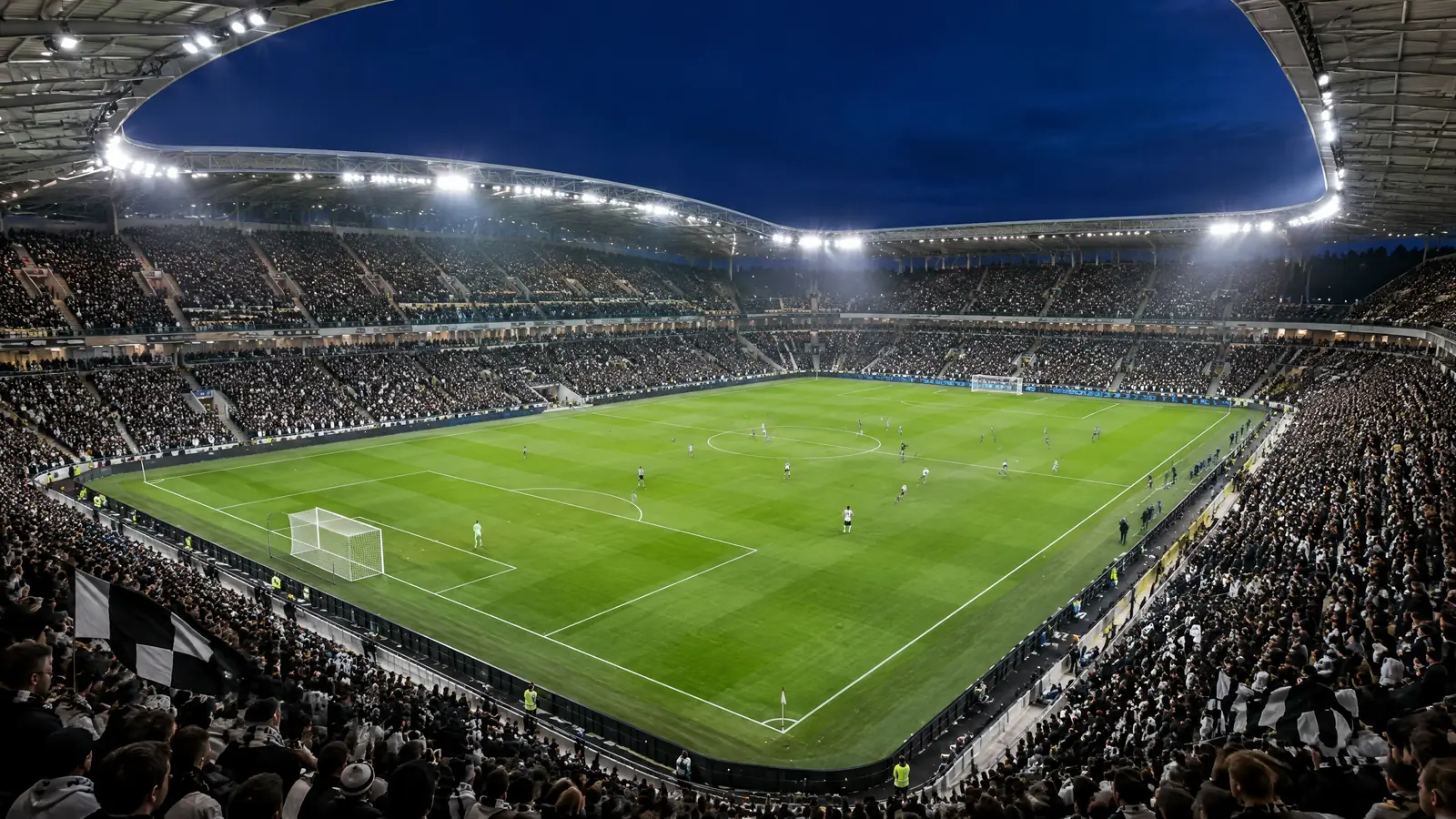
The club states the design decision the whole rebuild was for in one sentence: no barrier divides the fans from the pitch, and the minimum distance from the stands is 7.5 metres. The roof carries the lighting rig — 192 RGB LED bars beneath it, and projectors on its perimeter between 32 and 38 metres above the playing surface — which is a useful indication of how low and how close the structure sits. The vocabulary is the part a visiting British supporter trips over: Italian grounds are divided into settori and the ends are curve, so a ticket does not read like one from an English ground even when it describes the same seat. How stands and blocks are labelled elsewhere in Europe is worth ten minutes before you choose one. In being built for one sport and sized for the club rather than for a federation, it has more in common with Signal Iduna Park, built for one sport and nothing else than with the multi-use grounds Italy inherited from 1990.
Why it is also called the Allianz Stadium
Juventus announced in 2017 that the ground would be called the Allianz Stadium of Turin, starting on 1 July that year, under a naming-rights agreement the club stated would run six seasons to 30 June 2023. The name is still the official one on Juventus's own pages today, which is the extent of what those pages say — they do not set out the terms of whatever arrangement now carries it, so neither does this. Note that the sponsor's name is on several European grounds: the Allianz Arena in Munich is Bayern's, and the Allianz Stadium in London is Twickenham, renamed in 2024. Three different buildings, one insurer.
Stadium tours and the Juventus Museum
The stadium tour runs with a guide at a scheduled departure time and includes the Juventus Museum, which sits in the east side of the ground. Juventus price it from €29 for an adult, from €24 for under-14s and for club members, and free for under-5s and for disabled visitors. Opening hours are 9:30 to 18:30 on weekdays and 9:30 to 19:30 at weekends and on holidays; on matchdays they move with kick-off.
The club's own instruction is worth following literally: tour places are limited and tickets must be bought online to be sure of one, with only unsold places left at the ticket office. Two further conditions are stated and easy to miss — the route is not accessible to non-ambulatory visitors, with dedicated tours offered twice a month instead, and dressing-room access is not guaranteed on a tour after a match. Booking around a fixture is the normal difficulty here, and booking a tour around a fixture list sets out what to check before paying.
Tour prices, hours and conditions from Juventus, verified .
Following Juventus through a Serie A season
The capacity on this page moves only when the ground is altered. The league position moves every week, and the two say nothing about each other: 41,507 has been the figure since 2016, through seasons the club finished first and seasons it finished well below that, and not one of those results moved a seat. For where the club stands as a season runs — points, goal difference and matches played through each round — a Dutch-language Serie A standings site keeps the full table current. The anchor names the language because it is Dutch on an English page, and a reader who does not want that should be able to tell before clicking.
The ground has also hosted football that was not Juventus's. UEFA awarded it the 2014 Europa League final, played on 14 May that year between Sevilla and Benfica. UEFA's own wording when the venue was announced is the precise claim: it was the ground's first major European final, three years after it opened.
Common questions about Juventus Stadium
What is the capacity of Juventus Stadium?
Juventus state 41,507 seats. The ground opened with 41,147 and the difference is later building work, chiefly the Premium sectors — so a source published before that work is not wrong, it is old.
Why is Juventus Stadium also called the Allianz Stadium?
A naming-rights agreement took effect on 1 July 2017, and the club announced the ground would be known as the Allianz Stadium of Turin. Both names describe the same building in Turin; the club uses the sponsor name, and most search traffic still uses Juventus Stadium.
When did Juventus Stadium open?
8 September 2011, on the site of the Stadio delle Alpi, which had been inaugurated in 1990 for that summer's World Cup and whose materials were recycled into the new ground.
How close are the stands to the pitch at Juventus Stadium?
7.5 metres at the closest point, and Juventus state that no barrier divides the fans from the pitch. That proximity is the reason the ground was rebuilt smaller rather than renovated larger.
Sources and verification
Sources
Juventus, Allianz Stadium FAQ, verified · Juventus, Call it Allianz Stadium, verified · Juventus, Museum and Stadium Tour, verified · Juventus, Our Home: Allianz Stadium, verified · UEFA, Turin to stage 2014 UEFA Europa League final, verified