YOUR ULTIMATE GUIDE TO HOCKEY SOCKS
In ice hockey, the term “hockey socks” refers to the long, tube-like garments worn over shin guards, extending from the skate to the mid-thigh. They are a critical piece of the player’s uniform, designed to hold protective gear in place while ensuring a consistent team look. Unlike regular socks, these are outer garments made from durable, flexible fabrics like knitted polyester or modern synthetic blends. Their main jobs are to secure shin pads, offer light compression, and represent the team’s colors on the ice. Manufacturers like Bauer and CCM focus on creating socks that can withstand the high-impact nature of the sport, offering everything from traditional knit styles to lightweight, high-performance mesh versions.
Whether you’re a new player assembling your first kit or an equipment manager outfitting a team, understanding the nuances of hockey socks is essential. They are a frequently purchased item for players at all levels, from youth leagues to professional teams. This guide provides a practical, hands-on overview of what to look for, breaking down the best brands, materials, and sizing to help you make an informed choice.
WHO NEEDS HOCKEY SOCKS? (EVERYONE)
This piece of equipment is universal in hockey. Youth players need durable, easy-to-use socks that fit correctly over their first pair of shin guards. Parents are often tasked with navigating the world of sizing and materials to ensure their child is comfortable and protected. For amateur and professional players, the right sock can impact performance, offering features like moisture-wicking fabrics, compression, and even cut-resistance for added safety. Equipment managers for clubs and teams must source matching socks in various colors (home, away, alternate) to maintain a professional and uniform appearance on the ice, making this a central part of their inventory management.
Read more interesting descriptions in our dictionary here
MATERIALS, DESIGN, AND FUNCTION
Hockey socks are typically made from synthetic blends, primarily polyester, chosen for its durability, stretch, and moisture-managing properties. There are two main types:
- Knit Socks: The traditional choice, known for their thickness and durability. They offer excellent protection against minor abrasions but can be heavier and retain more moisture.
- Mesh Socks: A more modern option made from lightweight, breathable polyester. These offer superior moisture-wicking and a tighter, more athletic fit. They are often preferred for their comfort and performance feel.
Functionally, socks are held up using either a garter belt or, more commonly, with Velcro tabs found on the front and back of modern compression shorts or jocks (a system often called a “jock/jill strap system”). This ensures they stay securely in place throughout the game without the need for traditional, cumbersome tape.
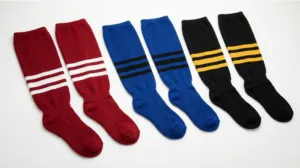
Colorful striped hockey socks in team colours, ideal for completing a full on-ice uniform
HOCKEY SOCKS BUYER’S GUIDE: BRANDS, PRICES, AND RECOMMENDATIONS
Choosing the right hockey sock depends on your level of play, budget, and personal preference. The table below compares the top brands on the market to help you find the perfect pair.
| Brand/Model | Type/Level | Standard Sizes (Length) | Price Range (USD) | Retailers (Where to Buy) | Recommendations & Rating |
| Bauer (Performance / Flex) | All Levels | Youth (21″-24″), Junior (22″-24″), Int (26″-28″), Senior (28″-30″) | $20 – $40 | PureHockey, HockeyMonkey, Amazon | Industry Standard. Bauer offers a huge range of socks for all players. Their performance models feature excellent moisture-wicking and a comfortable fit. A reliable choice for any player. Rating: ★★★★☆ |
| CCM (SX Series / Proline) | All Levels | Youth (22″), Junior (24″), Int (26″), Senior (30″) | $25 – $35 | PureHockey, IceWarehouse, CCM Hockey | Top Competitor. CCM provides high-quality knit and mesh socks, including NHL team-licensed versions. Known for durability and a pro-level feel. Great for team uniforms. Rating: ★★★★☆ |
| Warrior | Intermediate / Pro | Junior, Senior | $25 – $40 | Online Retailers, Specialty Stores | Performance Focused. Warrior socks are popular among serious players for their athletic fit and high-quality materials, often competing directly with Bauer and CCM’s top-tier offerings. Rating: ★★★★☆ |
| TronX (SK100) | Beginner / Casual | Youth (18″), Junior (22″), Int (26″), Senior (30″) | $12 – $20 | HockeyTron.com | Budget-Friendly. TronX offers solid, no-frills mesh socks at a very competitive price. Perfect for practice, pond hockey, or players on a tight budget. Rating: ★★★☆☆ |
| Cutshield / Cut-Resistant Brands | All Levels (Safety) | Junior, Senior | $35 – $50+ | Specialty Retailers, Online | Premium Protection. These socks feature advanced, cut-resistant fibers around the calf and Achilles area. A smart investment for players seeking maximum safety from skate blades. Rating: ★★★★★ |
PRACTICAL CONSIDERATIONS: SIZING AND FIT
Getting the right size is crucial. A sock that is too short will not fully cover the shin guard, while one that is too long will bunch up uncomfortably. Use this general guide based on shin guard size or player height:
•Youth (18″-22″): Fits 7″-9″ shin guards (Player Height: 3’2″ – 4’6″).
•Junior (22″-24″): Fits 10″-12″ shin guards (Player Height: 4’2″ – 5’3″).
•Intermediate (26″-28″): Fits 13″-14″ shin guards.
•Senior (28″-30″): Fits 15″+ shin guards.
Always check the manufacturer’s specific size chart, as measurements can vary slightly between brands. A well-fitting sock should be snug enough to stay up without restricting movement, providing a seamless connection between your skates and pants.
Are you interested in more concrete statistics? See the Stats & Records category here:
Do you need clearer explanations of venue‑related concepts? See the Stadiums & Arenas category here:
Do you want more terms about fans, tickets and matchday life? See the Fans, Tickets & Matchday category here:


